Published on:2026-05-24 Click:168
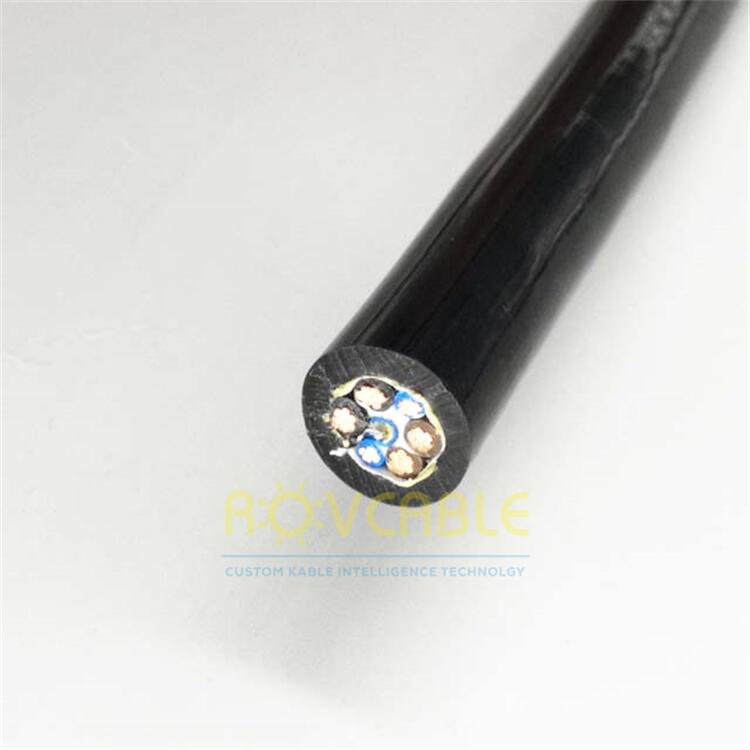
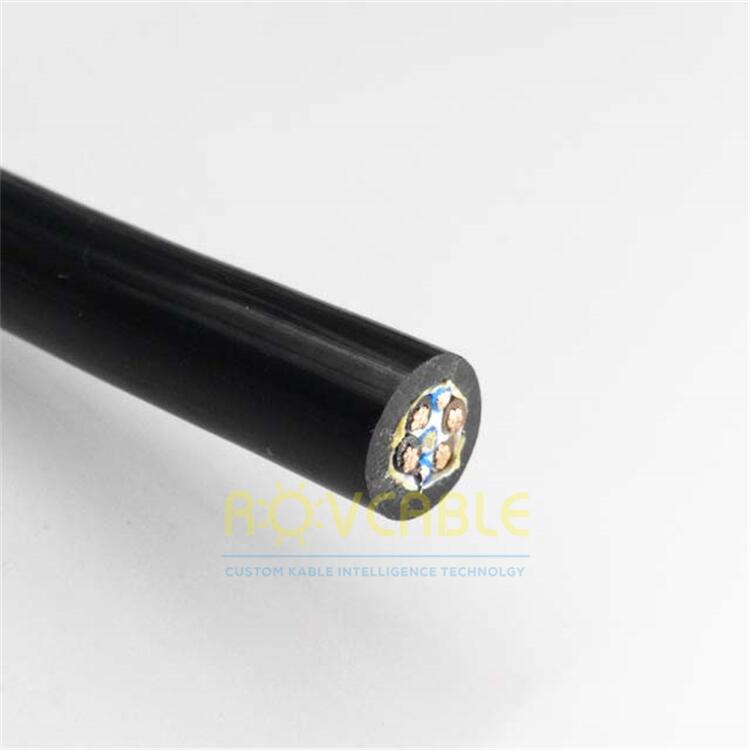
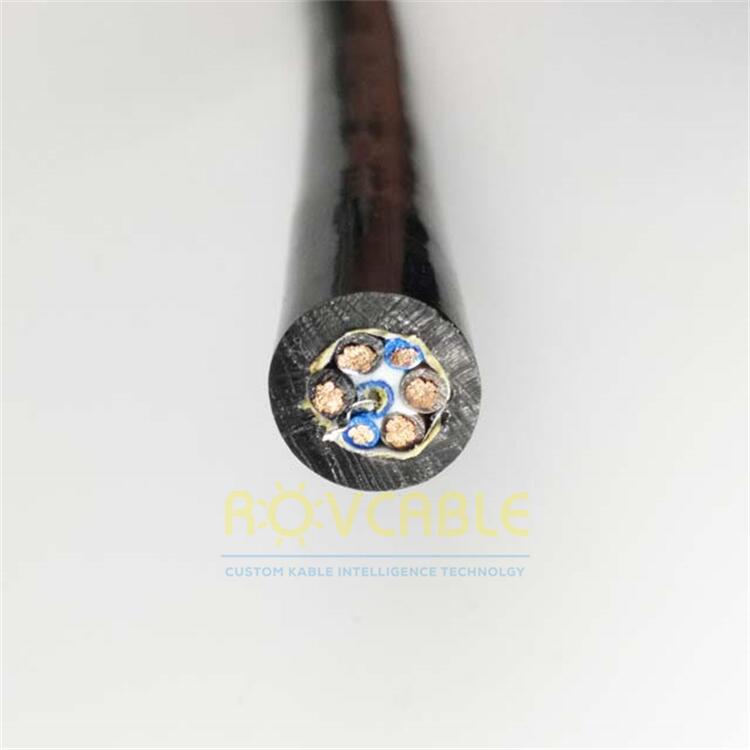
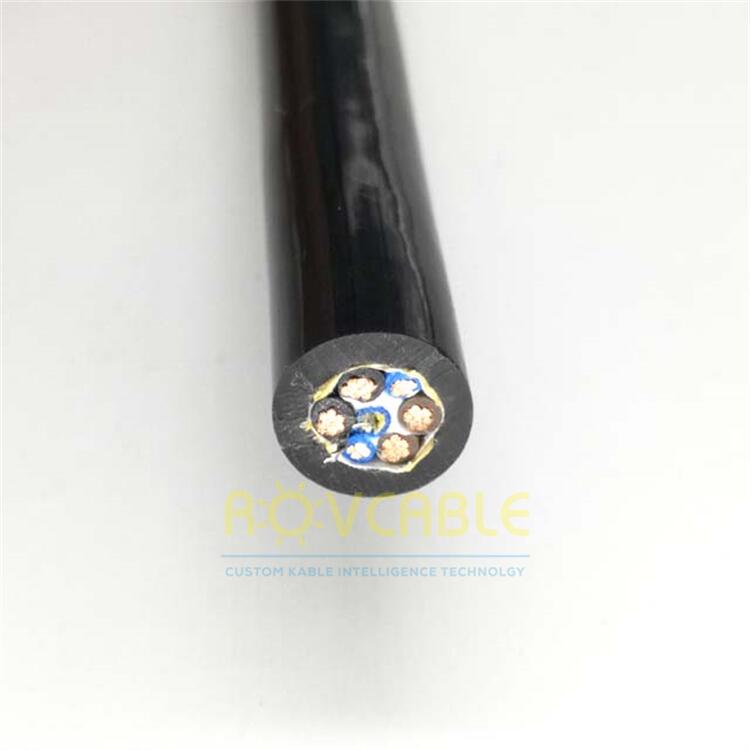
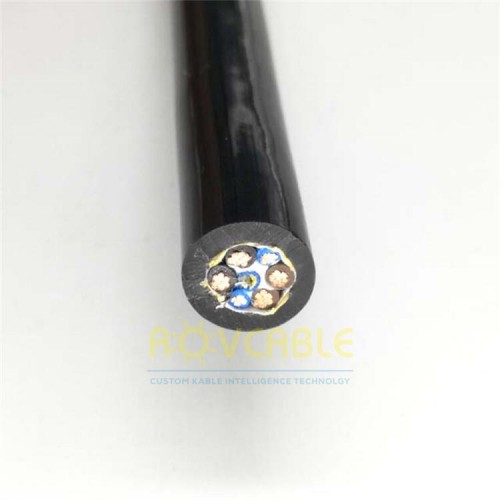
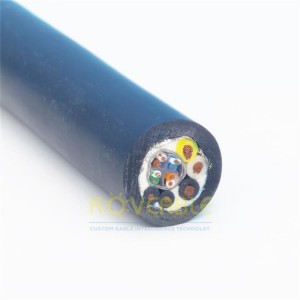
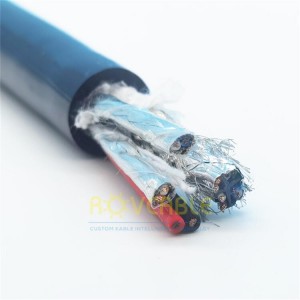
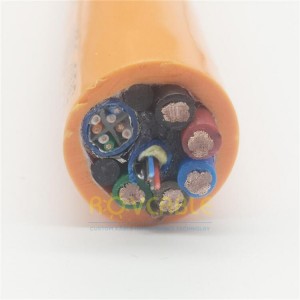
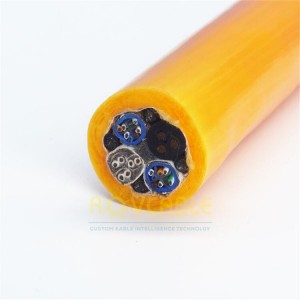
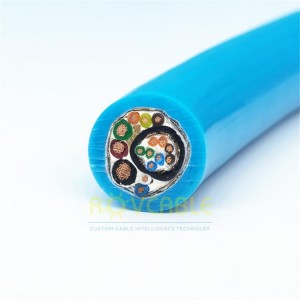
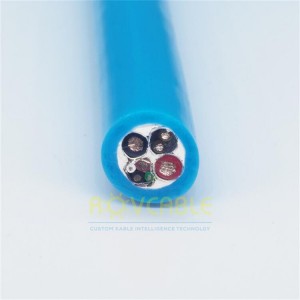
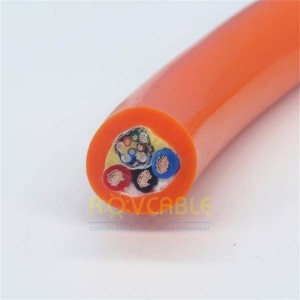
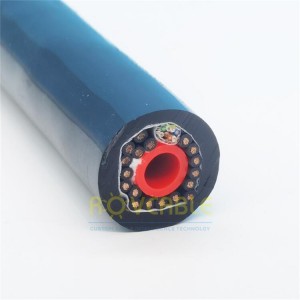
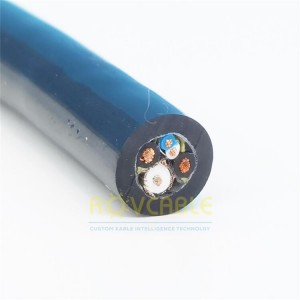
TPEE-insulated 6-core underwater robot cable with integrated fiber optic. Excellent cold-temperature flexibility for ROV, AUV, and marine robot fiber+power cable runs.
The TPEE-insulated underwater robot cable uses TPEE (Thermoplastic Polyester Elastomer) as the conductor insulation material instead of the conventional PE or XLPE. TPEE maintains its elasticity and flexibility at extremely low temperatures (to -55°C), making this cable ideal for Arctic, deep-sea, and cold-water ROV/AUV operations. The integrated fiber optic cores enable high-bandwidth data transmission alongside the six electrical conductors in a compact single-jacket construction.
| Parameter | Specification |
|---|---|
| Insulation Material | TPEE (Thermoplastic Polyester Elastomer) |
| Electrical Cores | 6 x stranded tinned copper |
| Fiber Optic | 2--12 x SM/MM fibers in loose tube |
| Outer Jacket | Polyurethane (PUR) |
| Cold Flexibility | Rated to -55°C without jacket cracking |
| Operating Temperature | -55°C to +85°C |
| Depth Rating | Up to 6,000 m |
| Custom | Conductor CSA, fiber count, SM or MM |
Request datasheet, custom length, or OEM pricing: sales@rovcable.com -- Shanghai Kabel Intelligence Technology Co., Ltd.
Standard PE insulation becomes rigid and brittle below -20°C to -30°C, and cracks under bending. TPEE maintains rubber-like elasticity down to -55°C, which is essential for Arctic deployments and deep-sea operations where seawater temperature approaches -2°C but winch/drum cycling in cold air can stress the cable far below 0°C.
TPEE is a premium material, approximately 2--3x the cost of PE insulation. However, for applications where cold-flexibility is essential, TPEE eliminates cable failures caused by brittle cracking, which can be far more costly than the material premium. Contact us for a cost comparison for your specific cable configuration.