Published on:2026-05-24 Click:178
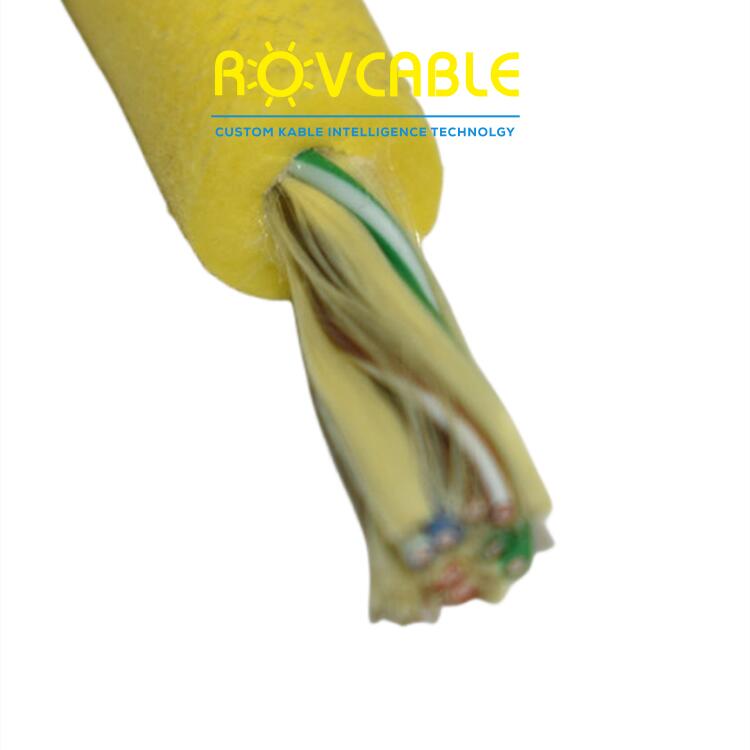
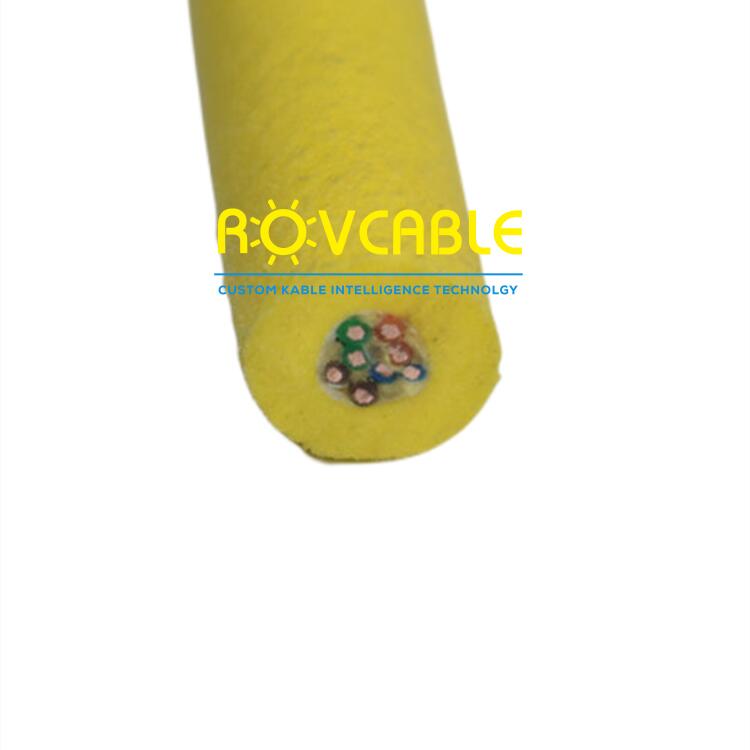
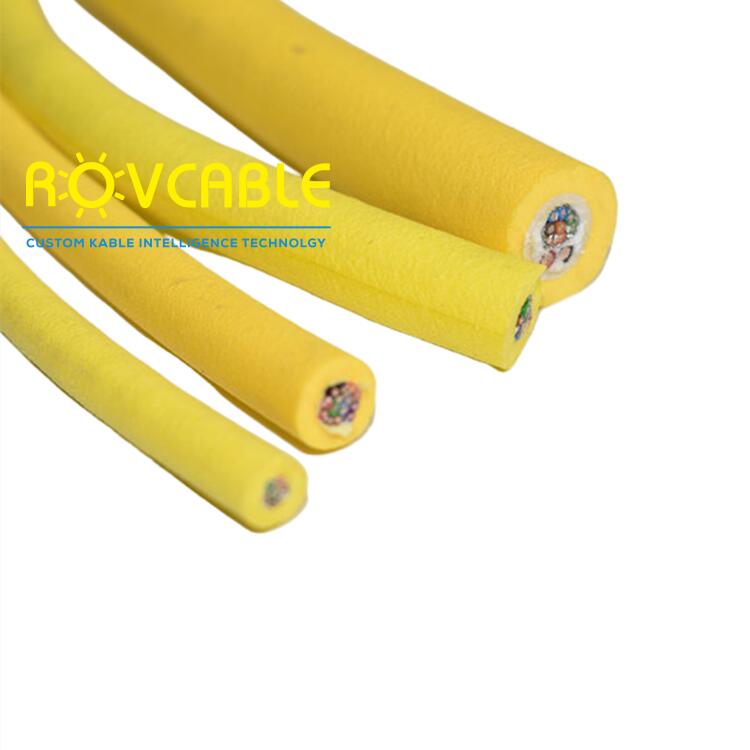
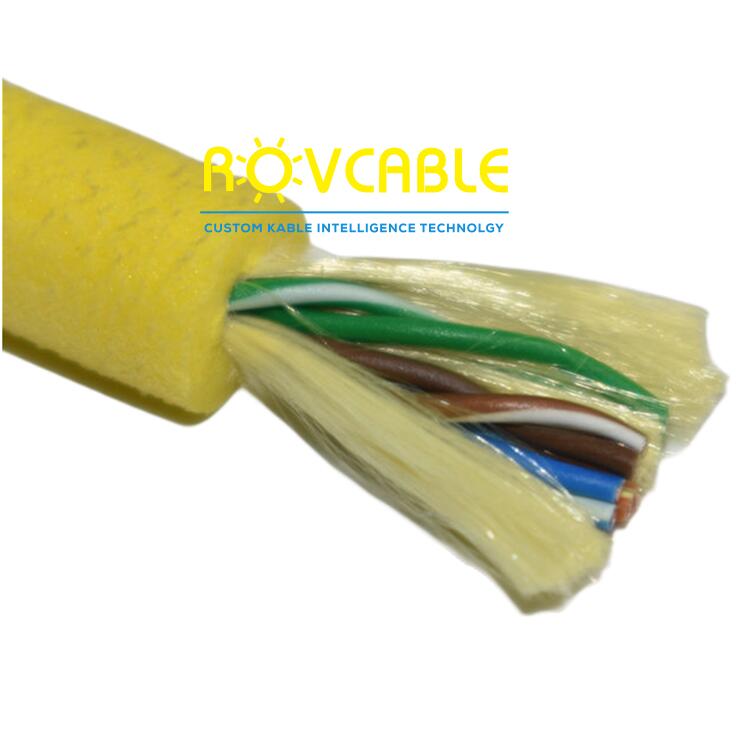
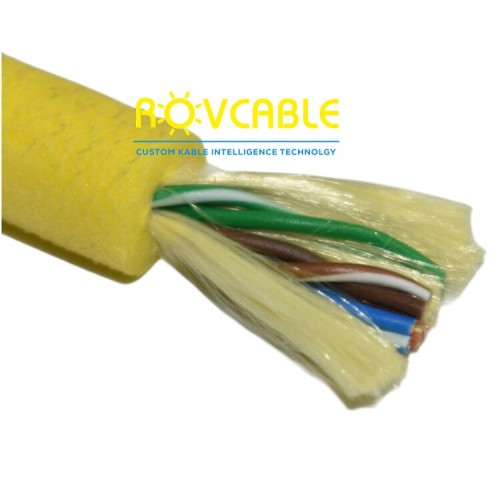
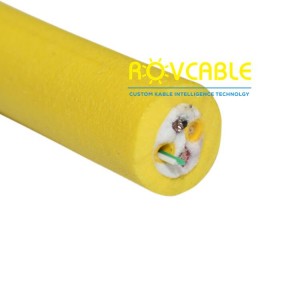
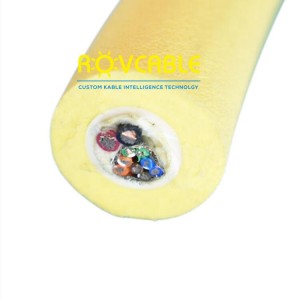
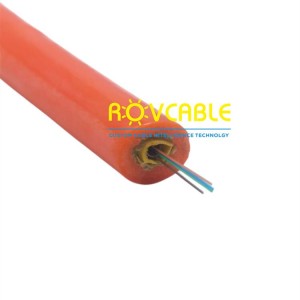
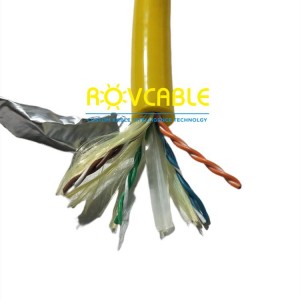
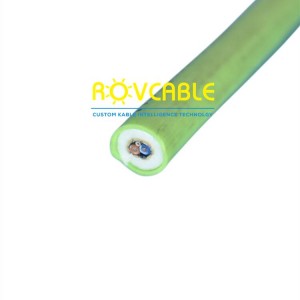
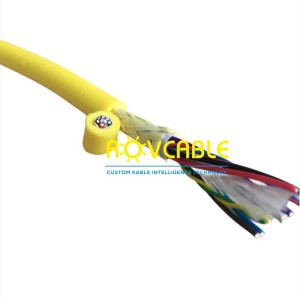
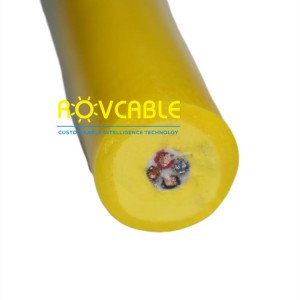
4 unshielded twisted pair (UTP) neutrally buoyant ROV tether. Foamed PUR, Cat5e UTP configuration for ROV Ethernet tether with lower cost than STP in low-noise environments.
The 4-UTP neutrally buoyant ROV tether uses unshielded twisted pairs (UTP) -- the same category as standard Cat5e/Cat6 office LAN cable -- within a foamed PUR buoyant jacket. UTP is appropriate for ROV systems with a physically separated power cable (so power switching noise does not couple into the Ethernet pairs) or low electrical noise environments where the shielding of STP/SFTP is not required. The UTP construction is lighter and lower cost than shielded tether variants. The foamed polyurethane (PUR) jacket uses a micro-cellular expanded jacket compound with a bulk density lower than seawater (~1.025 g/cm³), giving the cable near-zero or positive net buoyancy. This eliminates tether sag and reduces drag force on the ROV, improving vehicle manoeuvrability and reducing tether management workload during subsea operations.
| Parameter | Specification |
|---|---|
| Pairs | 4 x 2 UTP (unshielded twisted pairs, 24--26AWG) |
| Standard | Cat5e UTP equivalent |
| Jacket | Foamed micro-cellular PUR |
| Buoyancy | Neutrally buoyant |
| Bandwidth | 100 MHz (Cat5e) |
| Cost | Lower than STP/SFTP variant |
| Custom | AWG, buoyancy, length, Kevlar |
Request datasheet, custom length, or OEM pricing: sales@rovcable.com -- Shanghai Kabel Intelligence Technology Co., Ltd.
The jacket is manufactured from a micro-cellular expanded (foamed) polyurethane compound. During extrusion, a controlled foaming agent creates millions of tiny closed-cell air pockets within the jacket wall. These air cells reduce the bulk density of the jacket below that of seawater (~1.025 g/cm³), producing positive or neutral net buoyancy. The jacket retains all the abrasion resistance, oil resistance, and flexibility of standard PUR while achieving the buoyancy needed for ROV tether applications.
Use UTP when: the power cable is physically separate from the tether (no power in the same cable), OR the ROV uses only low-current electronics with no high-switching thrusters. Use STP/SFTP when: power and signal share the same tether cable, OR the ROV has high-current brushless thrusters that generate significant electromagnetic interference. When in doubt, specify STP -- it adds minimal cost and prevents signal integrity issues.