Published on:2026-05-24 Click:174
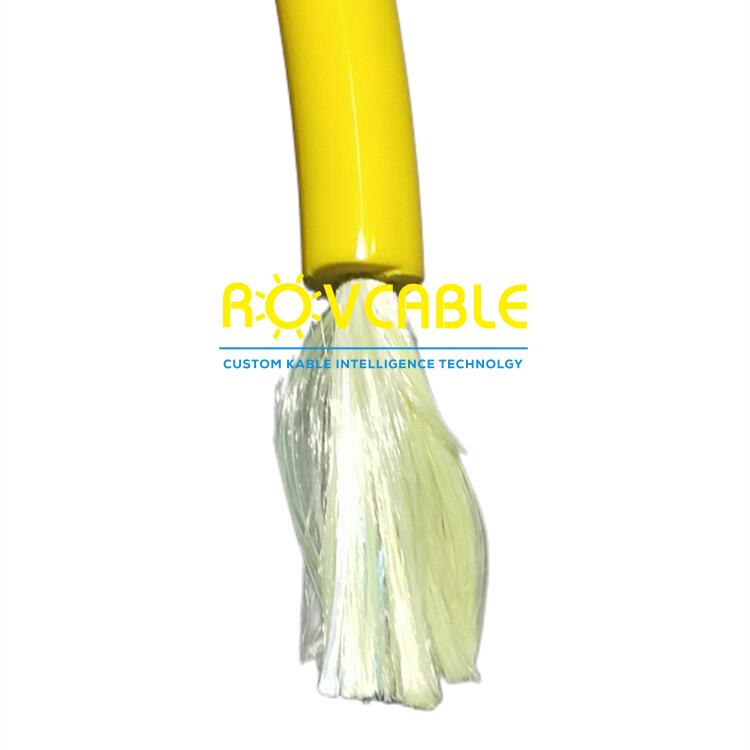
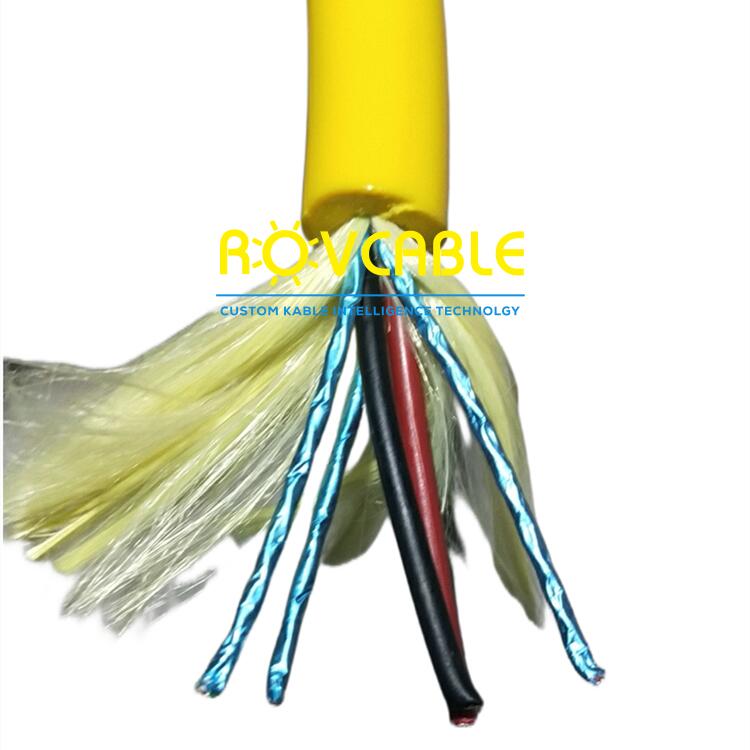
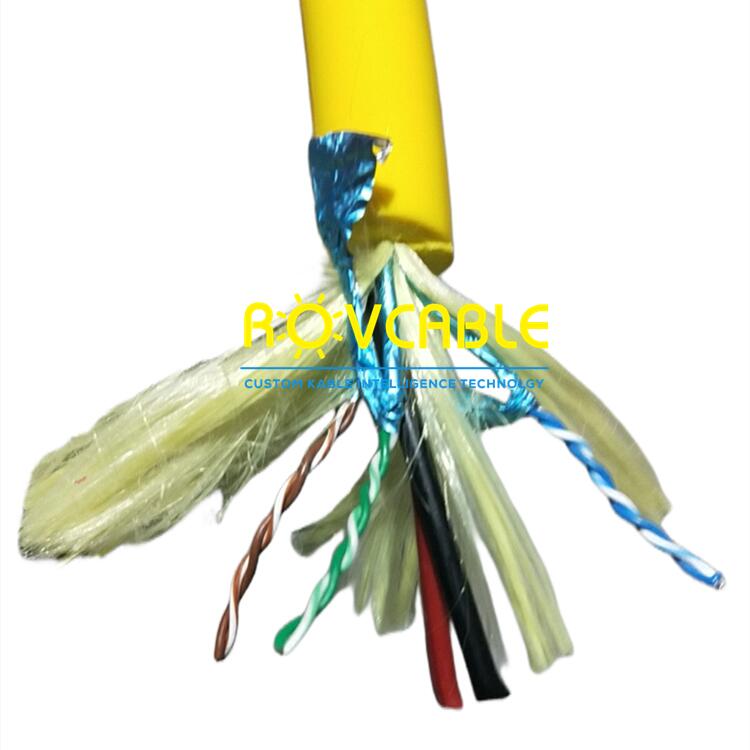
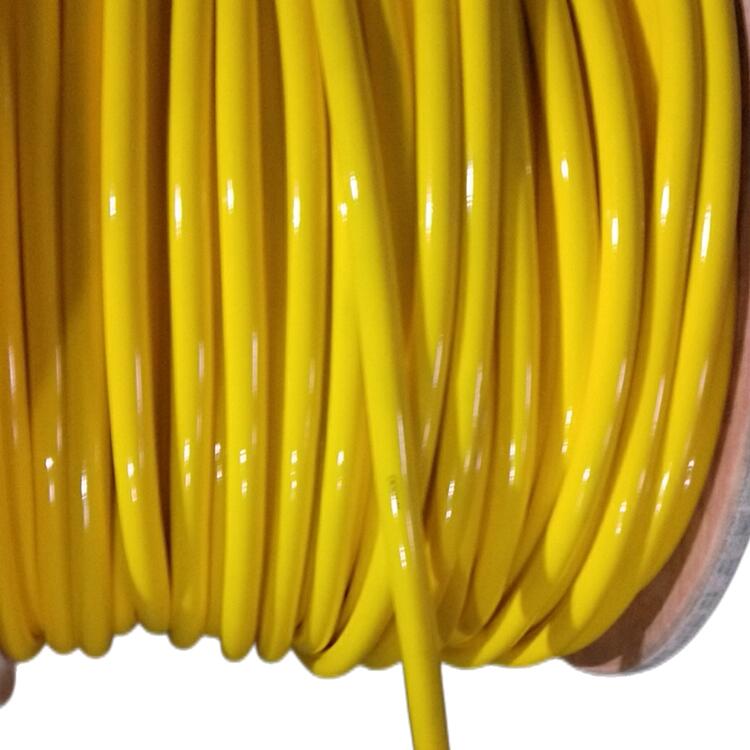
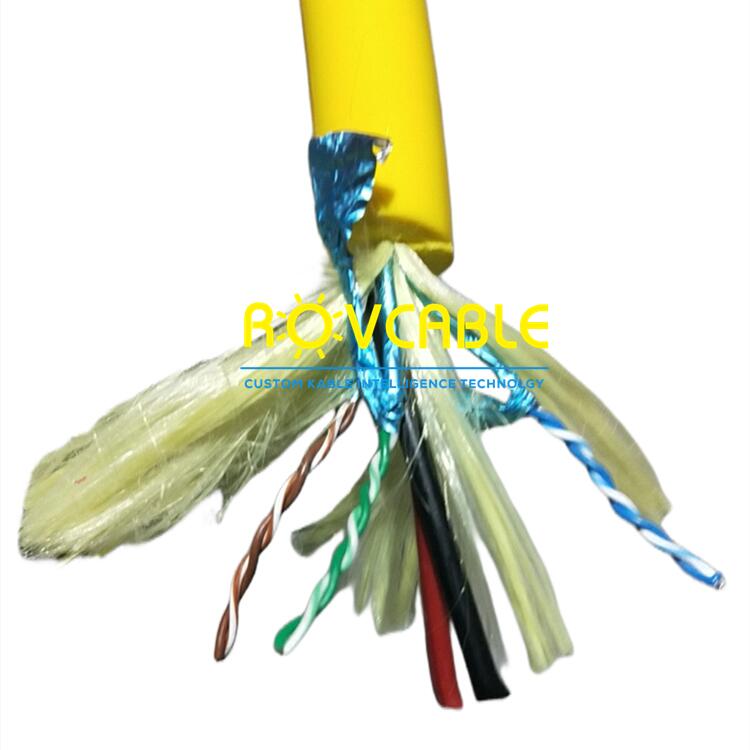
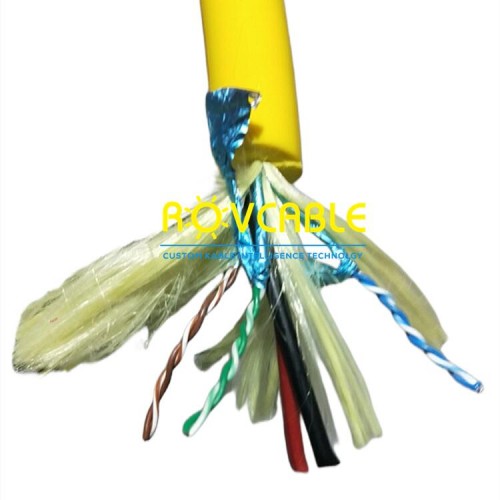
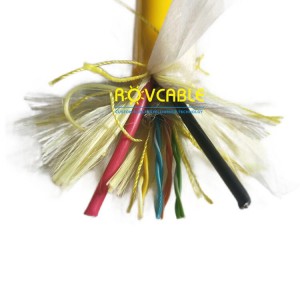
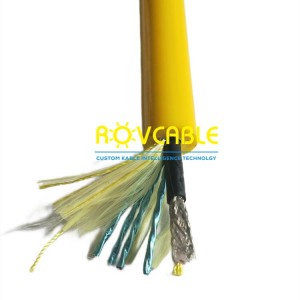
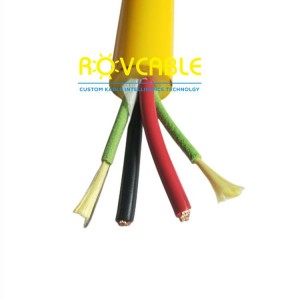
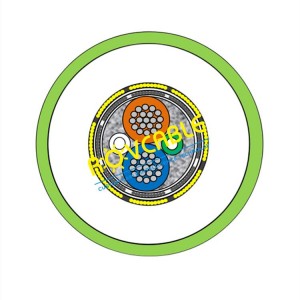
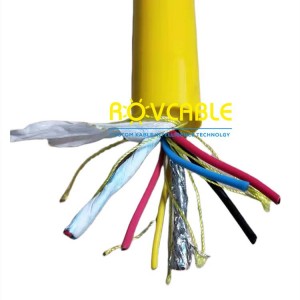
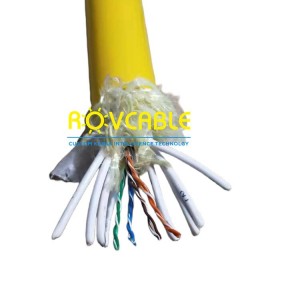
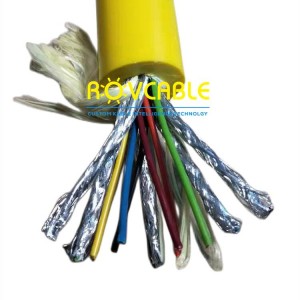
2 power + 3 data cable negative buoyant ROV tether. Dense PUR jacket for seabed-lying ROV tether requiring power and 3 data channels that sinks at depth.
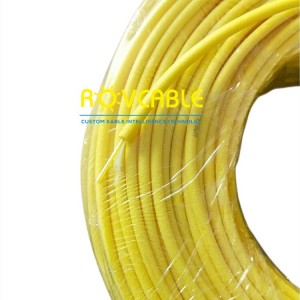
The 2-power + 3-data negative buoyant ROV tether is designed for seabed-running ROV applications where the tether must sink to the bottom and remain there rather than floating. A dense solid PUR jacket (non-foamed) gives the cable net negative buoyancy, causing it to sink in seawater. This is preferred for: long-range seabed-traversing ROVs, pipeline inspection vehicles, and applications where a floating tether would be a surface hazard or the seabed layout requires the cable to track the ROV path on the bottom.
| Parameter | Specification |
|---|---|
| Power | 2 x stranded tinned copper (CSA per spec) |
| Data | 3 x data cables or pairs (per spec) |
| Jacket | Dense solid PUR (negative buoyancy) |
| Buoyancy | Negative (sinks in seawater) |
| Depth Rating | Up to 3,000 m |
| Armour | Optional steel wire armour |
| Custom | Core mix, CSA, jacket density, armour, length |
Request datasheet, custom length, or OEM pricing: sales@rovcable.com -- Shanghai Kabel Intelligence Technology Co., Ltd.
Negative buoyancy is preferred when: (1) the ROV traverses a long seabed path and the tether must follow the bottom; (2) a floating tether would create a surface hazard in shipping channels or around platforms; (3) the ROV is a pipeline inspection vehicle that runs along the seabed on skids and needs the tether to lay flat; (4) the water column has strong mid-water currents that would drag a buoyant tether off course.
No -- a solid-jacketed negative buoyancy cable cannot be converted. However, you can order a combined cable: negative buoyant seabed sections (solid PUR) joined at a mid-water junction to neutrally buoyant tether sections (foamed PUR) for the hang-down portion. This "catenary" design uses each jacket type where appropriate. Contact us for composite tether design.