Published on:2026-05-24 Click:261
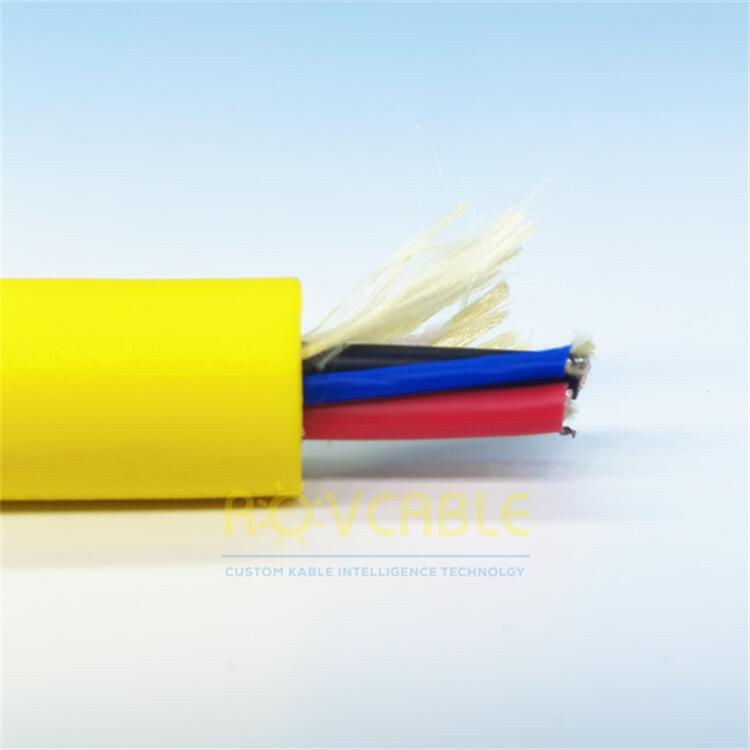
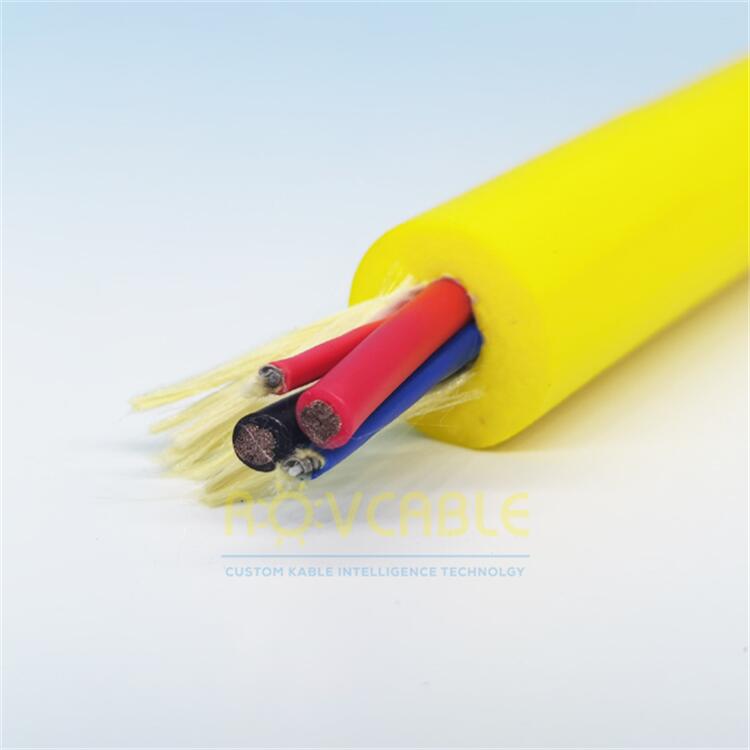
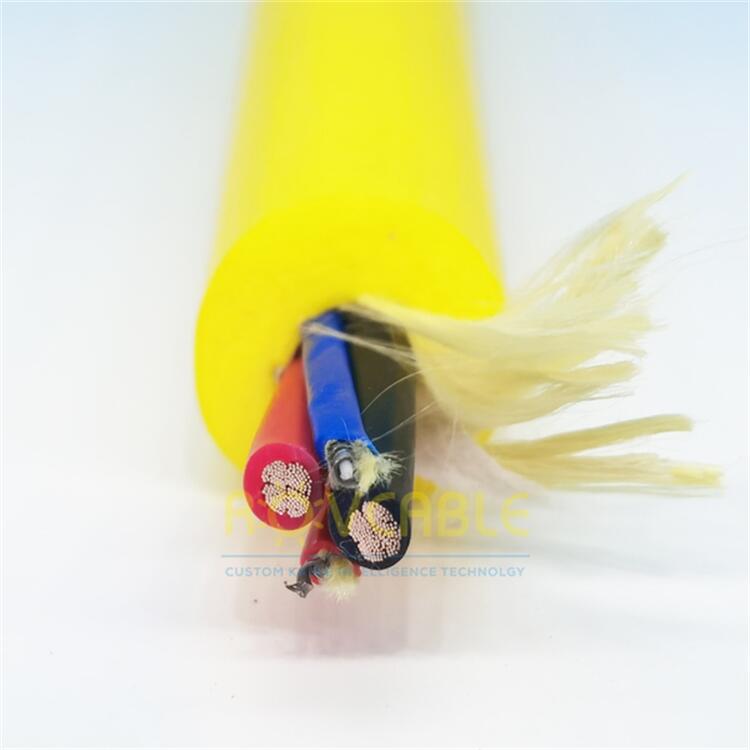
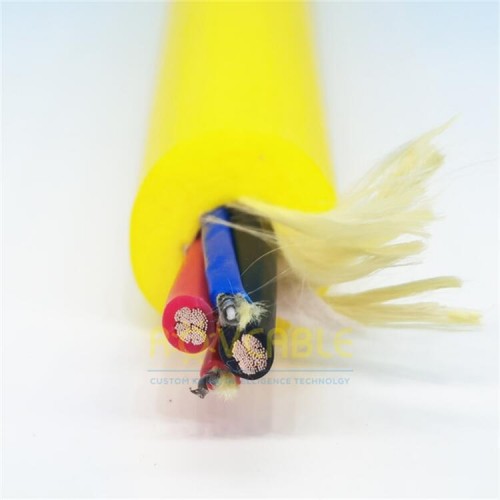
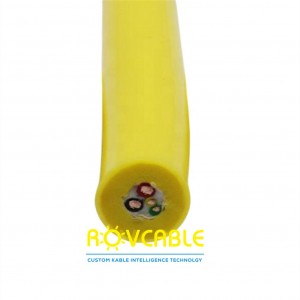
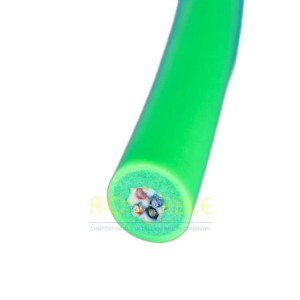
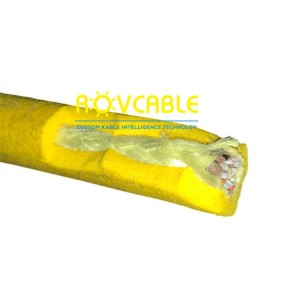
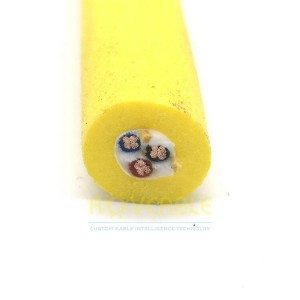
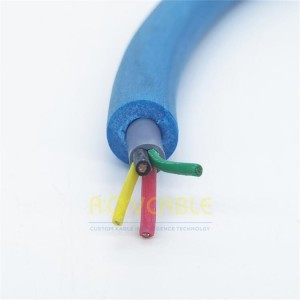
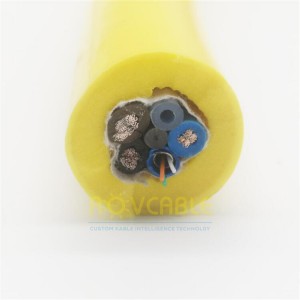
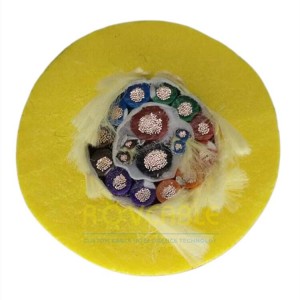
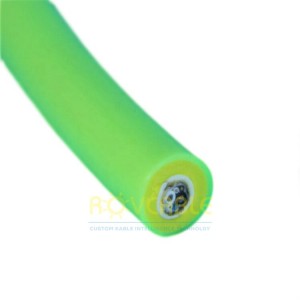
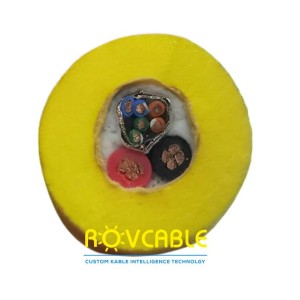
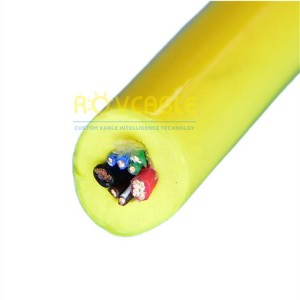
Underwater ROV tether cable with 2 optical fiber cores and 2 power conductors. Foamed PUR jacket for buoyancy, for fiber-connected ROV systems requiring power and high-bandwidth data.
The 2-fiber + 2-power buoyant ROV tether cable is designed for fiber-connected ROV systems requiring both high-bandwidth optical data (4K video, 10 Gbps Ethernet) and power supply within a single low-drag tether. Two optical fiber cores provide essentially unlimited data bandwidth, while two copper power conductors supply the ROV thruster and electronics. The foamed PUR jacket gives the cable neutral or positive buoyancy, keeping the tether afloat and reducing sag at depth. The foamed polyurethane (PUR) jacket uses a micro-cellular expanded jacket compound with a bulk density lower than seawater (~1.025 g/cm³), giving the cable near-zero or positive net buoyancy. This eliminates tether sag and reduces drag force on the ROV, improving vehicle manoeuvrability and reducing tether management workload during subsea operations.
| Parameter | Specification |
|---|---|
| Fiber Cores | 2 x SM OS2 (9/125 μm) or MM OM4 (per spec) |
| Power Conductors | 2 x stranded tinned copper (CSA per spec) |
| Jacket | Foamed micro-cellular PUR |
| Buoyancy | Near-neutral to positively buoyant |
| Fiber Bandwidth | 10 Gbps+ (SM fiber) |
| Depth Rating | Up to 3,000 m |
| Colour | Yellow (standard) / orange / black |
Request datasheet, custom length, or OEM pricing: sales@rovcable.com -- Shanghai Kabel Intelligence Technology Co., Ltd.
The jacket is manufactured from a micro-cellular expanded (foamed) polyurethane compound. During extrusion, a controlled foaming agent creates millions of tiny closed-cell air pockets within the jacket wall. These air cells reduce the bulk density of the jacket below that of seawater (~1.025 g/cm³), producing positive or neutral net buoyancy. The jacket retains all the abrasion resistance, oil resistance, and flexibility of standard PUR while achieving the buoyancy needed for ROV tether applications.
Single-mode (OS2, 9/125 μm) is recommended for ROV tethers exceeding 100 m, as it supports 10 Gbps and higher at any distance with low attenuation (0.2 dB/km at 1550 nm). Multi-mode (OM4) is limited to 10 Gbps at ≤400 m and 100 Gbps at ≤150 m. For ROV operations, single-mode is the standard choice in professional systems.